
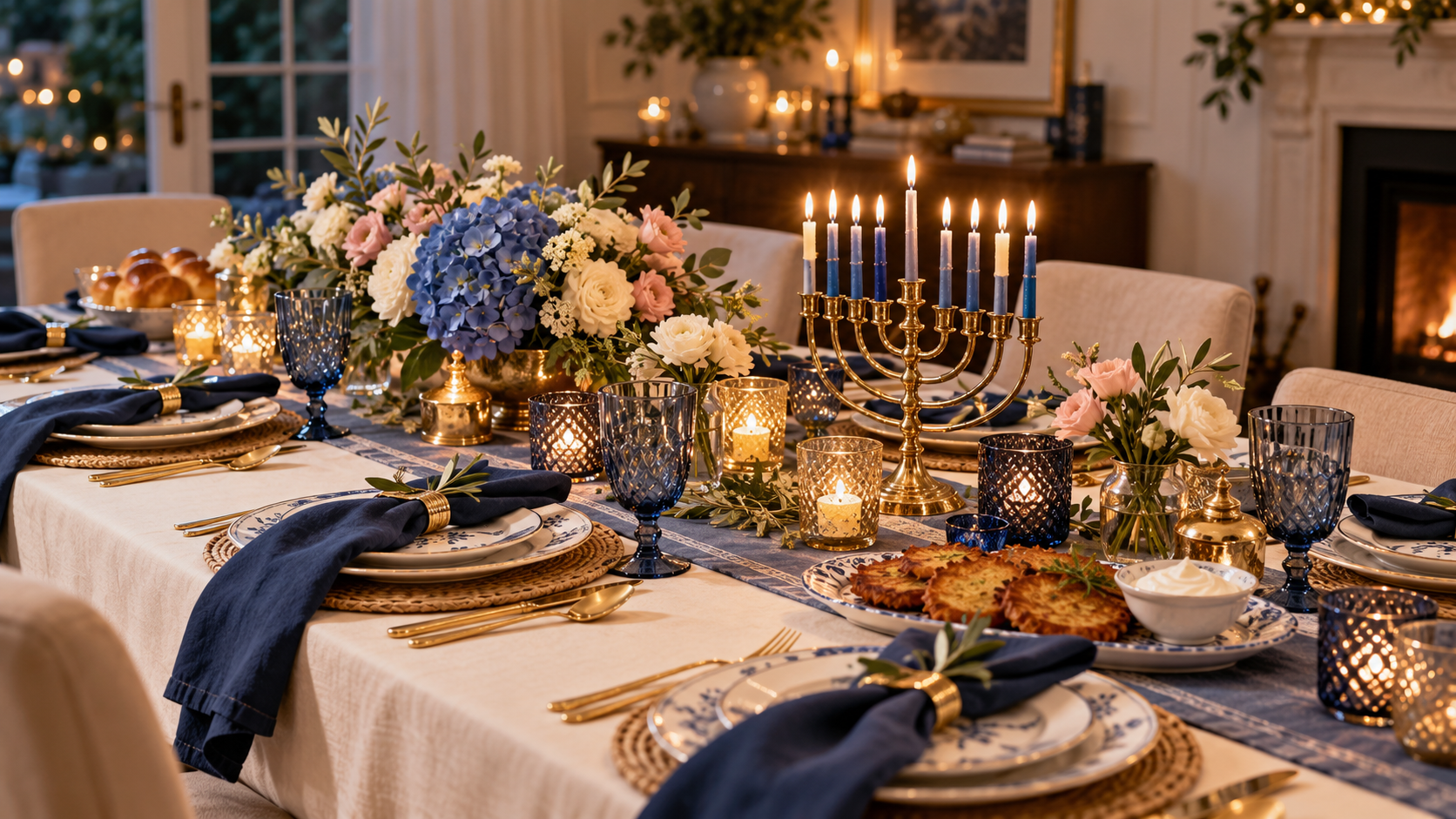
A thoughtfully prepared Hanukkah table sets the stage for an evening of warmth, meaningful traditions, and time spent together. With a little planning, hosting a beautiful Festival of Lights celebration can feel just as joyful as the gathering itself.
Planning a Hanukkah party should feel like the beginning of a joyful celebration, not another overwhelming holiday project.
Whether you're inviting a few relatives for a cozy dinner, gathering friends for latkes and conversation, or welcoming neighbors to a casual open house, a little preparation can help the evening feel comfortable, thoughtful, and easy to enjoy.
The secret isn't planning more. It's making a few important decisions early, keeping the details manageable, and leaving room for the traditions and moments that matter most to your family.
This Hanukkah party planning guide walks you through choosing your celebration style, creating your guest list, sending invitations, organizing food, and planning the evening. You'll also find a practical four-week hosting checklist to help everything come together.
Your Hanukkah Party Plan at a Glance
Before getting into the details, here are the six decisions that will shape your gathering:
Choose your celebration style. Decide between a family dinner, casual party, open house, or child-friendly gathering.
Select the date and time. Consider your family's traditions, candle-lighting schedule, and guests' availability.
Create your guest list. Choose a number of guests your space and budget can comfortably accommodate.
Send invitations. Clearly communicate the type of gathering, arrival time, and RSVP details.
Plan a manageable menu. Select a few favorites and identify what you can prepare ahead.
Create a flexible timeline. Organize the evening without scheduling every minute.
Once these decisions are made, the smaller details become much easier.
Start by Choosing the Kind of Hanukkah Gathering You Want
One of the simplest ways to make Hanukkah hosting less stressful is to decide what kind of gathering you actually want before shopping, planning the menu, or sending invitations.
There's no single correct way to host a Hanukkah party. Some families enjoy intimate meals and candle lighting at home, while others prefer larger gatherings filled with food, conversation, and activities.
The right celebration is the one that fits your household, traditions, and guests.
A Cozy Family Hanukkah Dinner
A family dinner is a lovely choice when you want time to sit together, enjoy a meal, and share conversation.
This format works especially well for smaller guest lists because you can plan around your available seating and serve food at a comfortable pace.
Keep the menu simple. One main dish, a few complementary sides, and a special Hanukkah favorite can create a satisfying meal without requiring an elaborate spread.
Best for: Close family, small gatherings, and hosts who prefer a quieter celebration.
A Casual Hanukkah Party With Friends
If you'd rather encourage mingling than organize a formal dinner, a casual Hanukkah party may be a better fit.
Instead of assigning seats or preparing a multi-course meal, arrange easy-to-serve food and let guests move comfortably between conversations.
A buffet, latke station, or selection of appetizers can help you spend less time managing the meal and more time enjoying your company.
Best for: Friends, mixed groups, and relaxed gatherings without formal seating.
A Hanukkah Open House
An open house is worth considering when you'd like to invite more people than you can comfortably seat for dinner.
Guests arrive during a designated window, enjoy refreshments, and visit at their own pace.
The key is to communicate expectations clearly. Your invitation should explain that guests are welcome to stop by rather than implying a formal meal will be served at one specific time.
Choose foods that are easy to replenish, make room for people to gather, and avoid planning activities that require everyone to arrive simultaneously.
If you plan to include candle lighting, communicate the appropriate time separately rather than treating it as a flexible drop-in activity.
Best for: Neighbors, extended family, friends, and larger social circles.
A Family-Friendly Hanukkah Celebration With Children
When children are attending, it can help to offer one or two simple activities alongside the main gathering.
A dreidel game, an age-appropriate craft, or a designated activity table can provide entertainment without turning the entire party into a tightly scheduled event.
The goal isn't to keep children occupied every minute. It's to give them meaningful ways to participate while leaving plenty of time for family connection.
Best for: Families with young children and multigenerational gatherings.
Which Hanukkah Party Format Is Right for You?
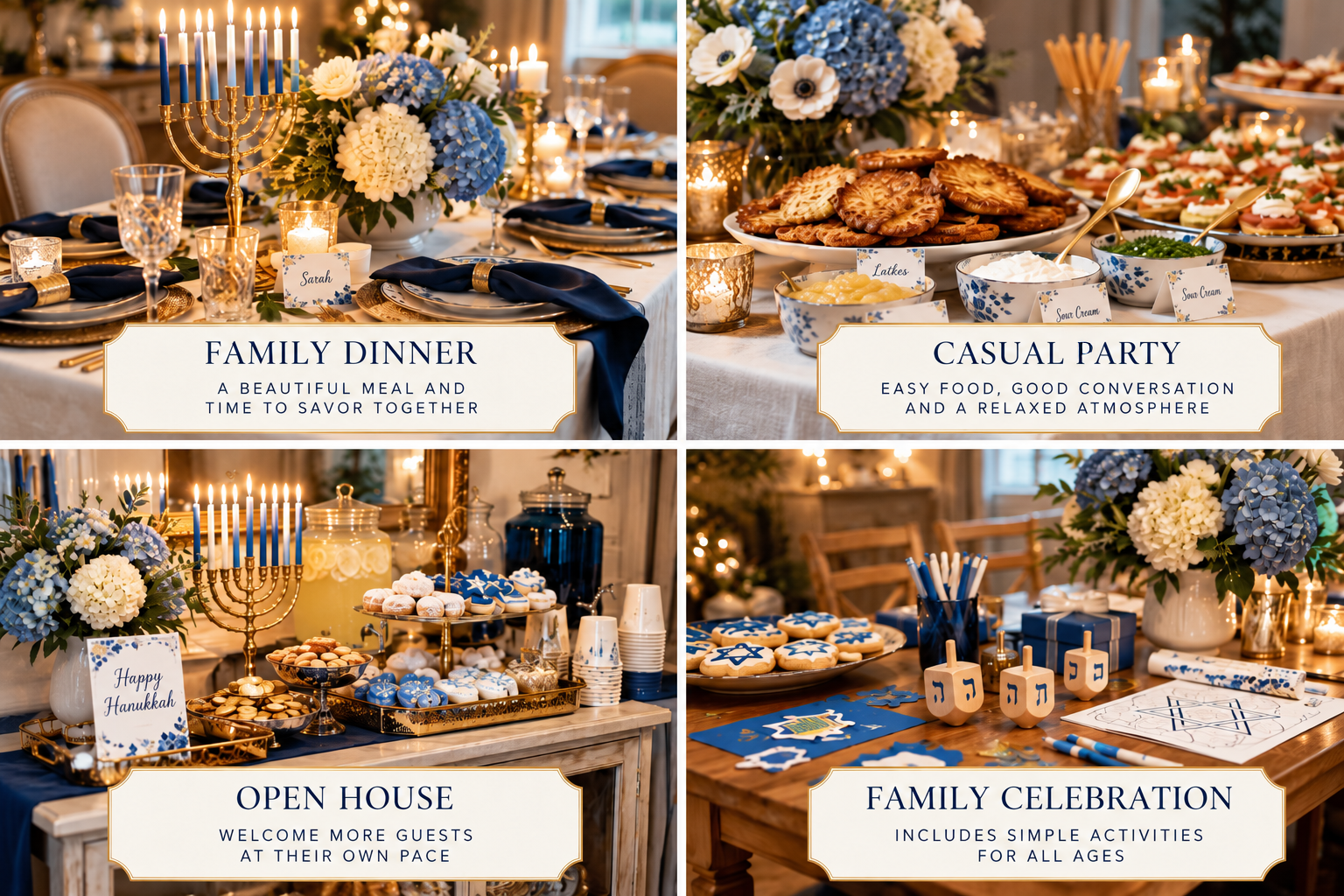
From an intimate family dinner to a casual latke party, welcoming open house, or family-friendly celebration, there are many wonderful ways to celebrate Hanukkah. Choose the gathering style that best fits your guests, space, and traditions so you can spend less time managing details and more time enjoying the celebration.
Gathering StyleFood ApproachSeatingBest FeatureFamily dinnerShared seated mealEveryone seatedRelaxed time togetherCasual partyBuffet or appetizersFlexibleEasy conversationOpen houseReplenishable refreshmentsMostly informalWelcoming more guestsFamily celebrationSimple meal or snacksFlexibleActivities for different ages
Hosting tip: If you're unsure which format to choose, start with the number of people you can comfortably accommodate. Let your available space and energy help determine the celebration rather than planning an elaborate event and trying to make everything fit.
Choose Your Date and Decide When Guests Should Arrive
Before sending invitations, confirm the dates of Hanukkah and consider how your household observes the holiday.
When Is Hanukkah in 2026?
In 2026, Hanukkah begins on Friday, December 4, and concludes after nightfall on Saturday, December 12.
Because the first evening falls on a Friday, families observing Shabbat will have additional timing considerations.
On Friday, December 4, Hanukkah candles are traditionally lit before Shabbat candles. On Saturday evening, December 5, the Hanukkah lights are kindled after Shabbat ends, according to the household's practice.
Local sunset and candle-lighting times vary by location, so consult an appropriate Jewish calendar rather than assuming the same time applies everywhere.
Helpful resource: Chabad's Hanukkah 2026 Calendar provides night-by-night guidance, including special instructions for Shabbat.
Do You Have to Host on the First Night of Hanukkah?
Not at all.
Although Hanukkah lasts eight nights, a social gathering can be planned for whichever date best accommodates your family, guests, and traditions.
You might choose a weekend evening when relatives are available, an afternoon open house, or a smaller gathering during the week.
If candle lighting is an important part of your celebration, choose a schedule that accommodates the religious observance rather than expecting it to fit an arbitrary party timeline.
Plan Around Your Family's Traditions
Hanukkah is celebrated in different ways across Jewish households and communities.
For some families, candle lighting and blessings will be the central shared moment. Others may place greater emphasis on a family meal, songs, games, or time together.
Consider what feels meaningful and appropriate for your household before establishing the schedule.
If guests are unfamiliar with Hanukkah customs, a brief explanation of what to expect can help everyone feel comfortable and included.
Make Your Guest List Before Planning the Food
Once you've chosen your gathering style and date, it's time to decide who to invite.
Rather than starting with everyone you'd love to include, consider the number of people your home can comfortably accommodate.
Think about:
How many guests can sit or gather comfortably?
Will children need extra room to play?
Is there enough space for serving food and moving around?
Will you need additional chairs, tables, or dishes?
Are you planning a seated meal or flexible refreshments?
The goal is to create a gathering that feels welcoming without making the space or hosting responsibilities difficult to manage.
Ask About Dietary Needs and Family Preferences
Food is often an important part of Hanukkah celebrations, but guests may have different dietary needs and observances.
Ask about allergies, vegetarian preferences, and kosher requirements where appropriate. If you are uncertain about someone's level of kosher observance, it's better to ask respectfully than to assume a particular menu or kitchen arrangement will meet their needs.
A simple question during the RSVP process can save considerable confusion later.
Hosting tip: Finalize a realistic guest count before choosing recipes or buying serving supplies. It's much easier to adjust a menu when you know approximately how many people you're feeding.
Send Hanukkah Invitations That Tell Guests What to Expect
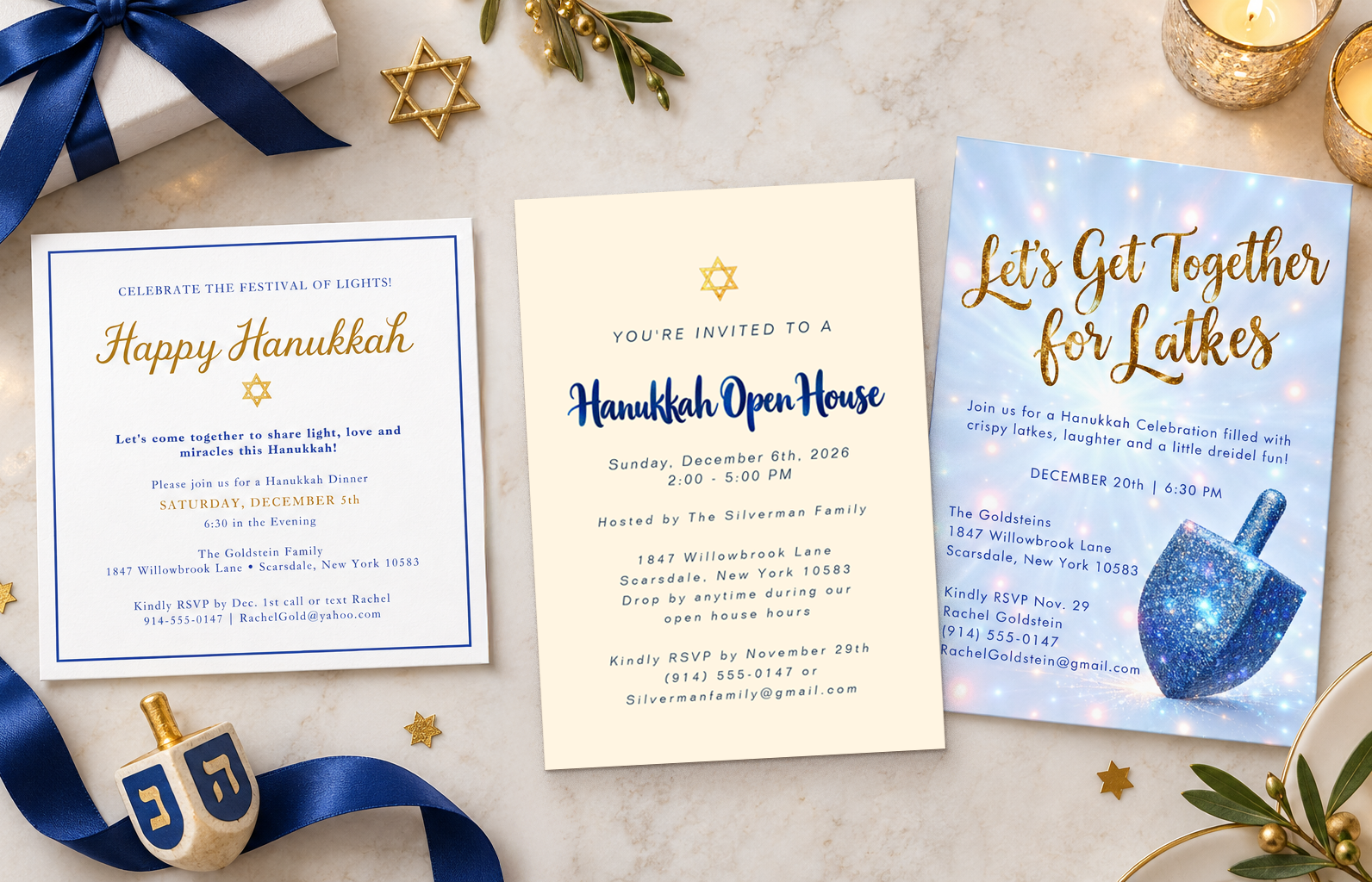
Whether you're planning an intimate Hanukkah dinner, a welcoming open house, or a casual gathering filled with latkes and laughter, the right invitation helps guests know what to expect. These three Chateau Whispers designs offer personalized options for different celebration styles.
An invitation does more than announce the celebration. It helps guests understand what kind of gathering you're hosting and how to prepare.
A thoughtful Hanukkah invitation can establish the mood while communicating the practical details everyone needs.
What Should a Hanukkah Party Invitation Include?
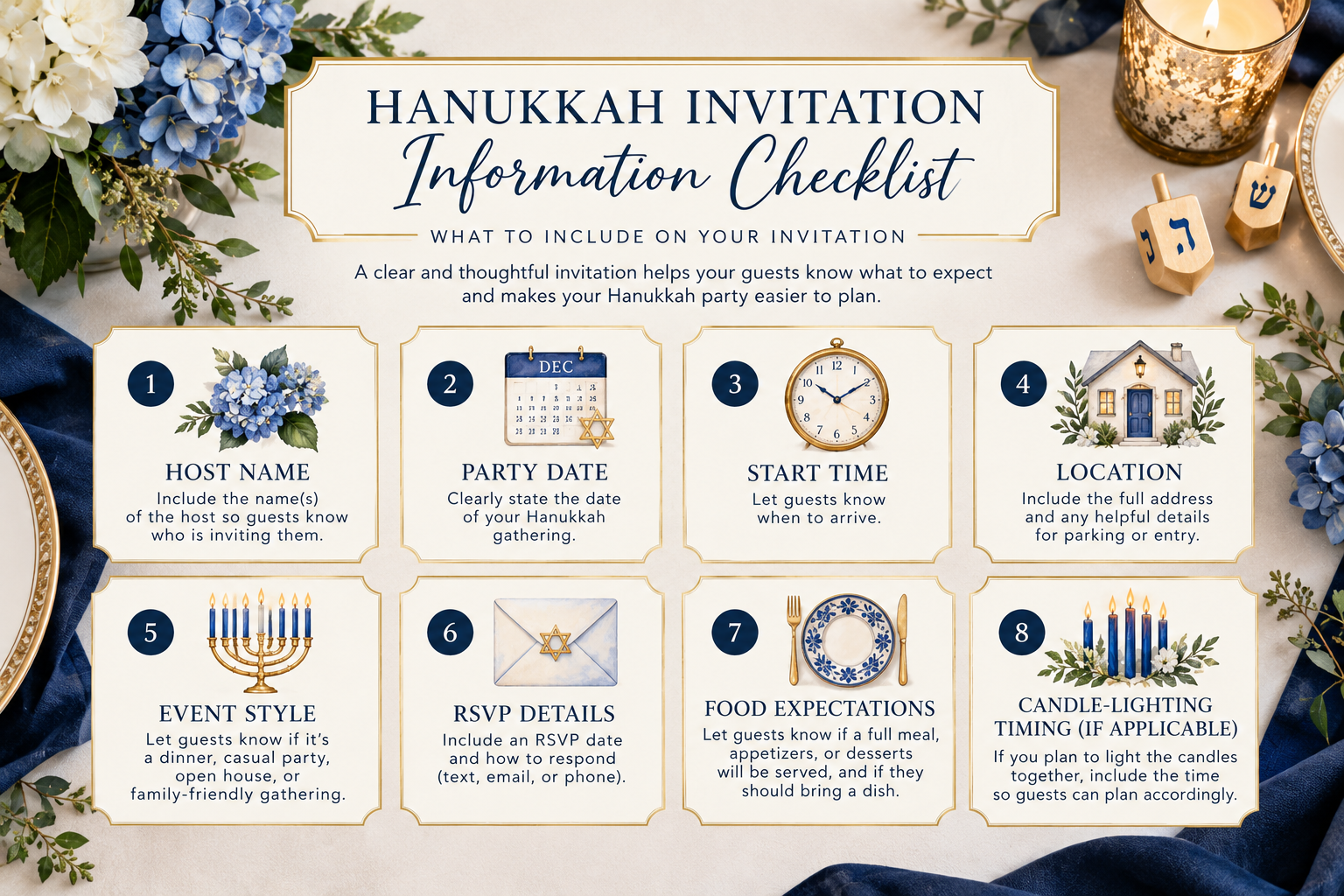
A thoughtful Hanukkah invitation does more than announce the celebration—it helps guests know exactly what to expect. Use this eight-point checklist to make sure you've included everything from the date and location to RSVP details, food plans, and candle-lighting information when applicable.
Be sure guests can easily find:
The name of the host or hosting family
The date of the gathering
The starting time and, for an open house, the visiting window
The location
Whether the event is a dinner, casual party, or open house
An RSVP deadline and contact information
Any important information about food, activities, or timing
If guests are invited to participate in candle lighting, explain when that will occur when the timing is known.
When Should You Send Hanukkah Invitations?
For many local gatherings, sending invitations approximately three to five weeks in advance is a practical planning guideline.
If relatives need to travel, guests have particularly busy schedules, or you're ordering personalized printed invitations, allowing additional time can help.
For Hanukkah 2026, an October 28 planning start gives you just over five weeks before the holiday begins.
That makes late October a good time to confirm your guest list, choose invitations, and communicate your plans.
If you're ordering printed stationery, check current production and delivery estimates before committing to a mailing date.
Simple Hanukkah Invitation Wording Examples
For a family dinner:
Please join us for a Hanukkah dinner as we celebrate the Festival of Lights with family, delicious food, and time together.
Saturday, December 5, 2026
[Time, chosen with the family's observance in mind]
[Host's Address]
Kindly RSVP by [Date].
For a casual open house:
Love, Light & Hanukkah
You're warmly invited to celebrate with us!
Stop by for holiday treats, friendly conversation, and a little Hanukkah cheer.
[Date]
[Open House Hours]
[Host's Address]
Please RSVP by [Date].
These examples can be adjusted to reflect your family's voice and traditions.
[PRODUCT PLACEMENT #1: Elegant Hanukkah invitation from the Chateau Whispers collection. Select a real design that supports the invitation style shown here.]
If you enjoy coordinating the little details, personalized invitations and matching address labels can help make sending invitations feel more organized and intentional.
Explore: Elegant Hanukkah Invitations and Party Essentials from Chateau Whispers.
[INTERNAL-LINK OPPORTUNITY: Link to the existing Chateau Whispers invitation wording article only where broader invitation-writing advice genuinely helps the reader.]
Plan a Hanukkah Menu You Can Actually Manage
A memorable Hanukkah gathering doesn't require an overflowing buffet or an entire day in the kitchen.
The best menu is one you can prepare comfortably while still having time to enjoy your guests.
Choose Your Food Style Before Choosing Recipes
Start with the kind of gathering you've planned.
For a seated dinner, you might prepare one main dish, two sides, and dessert.
For a casual party, a selection of appetizers and one or two substantial foods may be easier.
For an open house, consider foods that hold up well during the visiting window and can be replenished or safely stored as needed.
Choosing the serving format first keeps you from selecting dishes that don't fit the event.
Include a Few Hanukkah Favorites
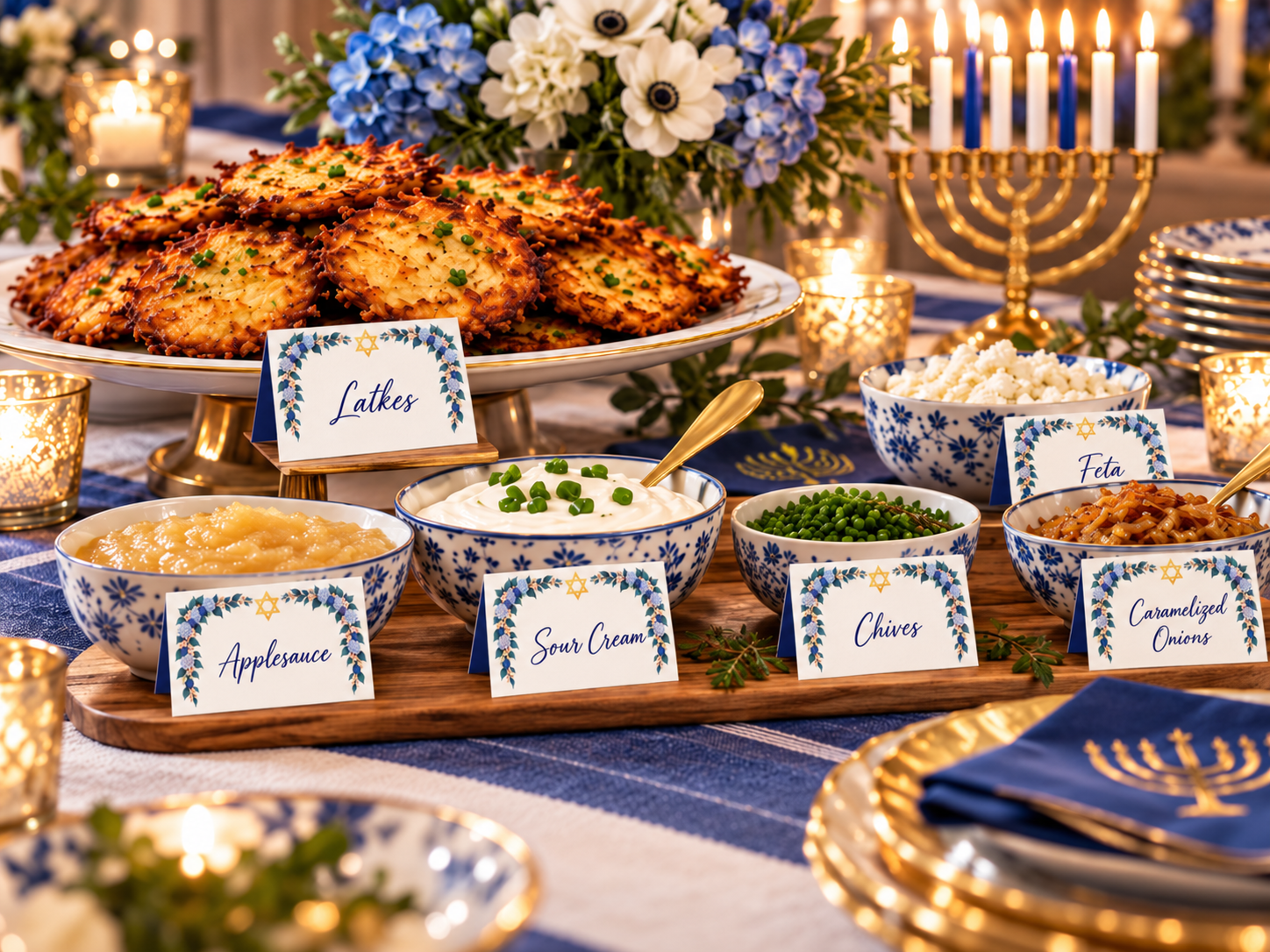
A self-serve latke bar is a delicious way to make Hanukkah entertaining easier. Arrange crispy potato latkes alongside classic toppings like applesauce and sour cream, add a few optional extras, and use handwritten food cards to help guests find their favorites. It's a welcoming setup that encourages everyone to serve themselves and enjoy the celebration.
Many Hanukkah food traditions celebrate the significance of oil, recalling the miracle associated with the rededication of the Temple.
Popular foods include:
Latkes: Crispy potato pancakes traditionally served with toppings such as applesauce or sour cream.
Sufganiyot: Fried doughnuts, often filled with jelly, enjoyed during Hanukkah.
Other traditional foods: Different Jewish communities have their own fried specialties, including sfenj and bimuelos.
You don't need to prepare every traditional food or introduce a complicated new recipe.
Choose what your household enjoys and what works with your gathering.
A Simple Hanukkah Party Menu Framework
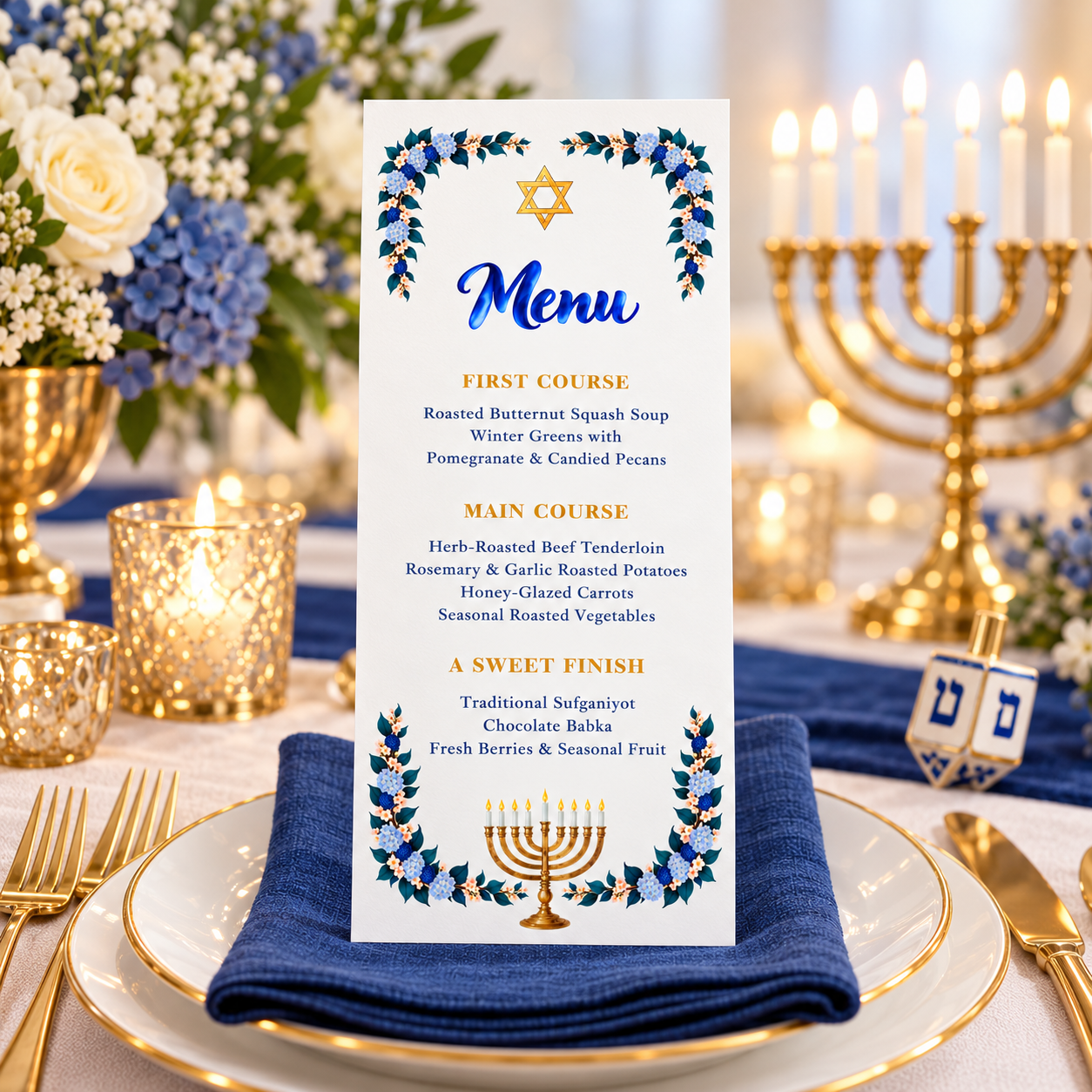
A simple Hanukkah menu framework makes it easier to plan a beautiful, balanced holiday meal.
Planning your Hanukkah menu doesn't have to mean preparing a complicated feast. Whether you're hosting a seated dinner or a relaxed buffet, a simple approach is to build your menu around three essentials: one satisfying centerpiece, a few complementary dishes, and something sweet to finish.
Start with your main dish. Choose something your guests will enjoy, whether that's a family-favorite recipe, a hearty entrée, or a generous platter of crispy latkes for a more casual gathering.
Add a few supporting dishes. Balance the meal with seasonal vegetables, a fresh salad, or a selection of toppings and accompaniments. You don't need an endless variety—two or three thoughtfully chosen options are often plenty.
Finish with something sweet. Traditional sufganiyot (jelly-filled doughnuts), chocolate babka, or a favorite family dessert can provide a lovely ending to the meal.
Consider your guests' dietary needs and any kosher practices observed by your household when choosing dishes.
The goal isn't to serve the most impressive menu. It's to offer food everyone can enjoy while leaving yourself enough time to be part of the celebration.
What Can You Prepare Ahead?
A manageable menu begins with knowing what doesn't need to happen at the last minute.
Consider preparing sauces and toppings in advance, washing and arranging produce, setting out serving equipment, and making desserts that store well.
For foods best served freshly cooked, reserve an appropriate window for final preparation.
If guests offer to bring food, give them a specific category rather than leaving everyone to guess what might be helpful.
Hosting tip: Choose one food item worth giving extra attention to, then keep the rest straightforward. An enjoyable gathering doesn't depend on making every dish from scratch.
[INTERNAL LINK: Connect to the Chateau Whispers Friendsgiving potluck planning guide if discussing how to coordinate dishes contributed by guests.]
Create a Welcoming Space Without Overdecorating

A beautiful Hanukkah table doesn't have to be complicated. Coordinating blue and gold accents, soft candlelight, fresh florals, and festive tableware can create a warm, inviting setting. A few thoughtful details are all it takes to make guests feel welcome and the celebration feel special.
The atmosphere of your gathering matters, but it doesn't need to be elaborate.
Begin by preparing the spaces your guests will actually use.
Make sure there is somewhere comfortable to sit, a convenient place for coats and bags, and a clear route to refreshments.
A tidy serving area and a few thoughtful details often contribute more to a welcoming environment than an abundance of decorations.
Let Simple Details Set the Mood
You might choose a coordinated table setting, fresh flowers, or a restrained color palette that complements your home.
Navy blue, warm gold, and soft florals can create an elegant setting, but no particular decorative color scheme is required for Hanukkah.
The celebration's religious and cultural meaning should remain distinct from its decorative elements.
If you'll be lighting a hanukkiah, plan for a safe, stable location consistent with your family's practice. Keep flames away from loose fabrics, decorations, children, and anything flammable, and never leave burning candles unattended.
[EDITORIAL IMAGE: An elegant but approachable Hanukkah gathering table with space for serving food and comfortable seating. Avoid placing flammable decorations around a lit hanukkiah.]
Add Thoughtful Details Where They Matter
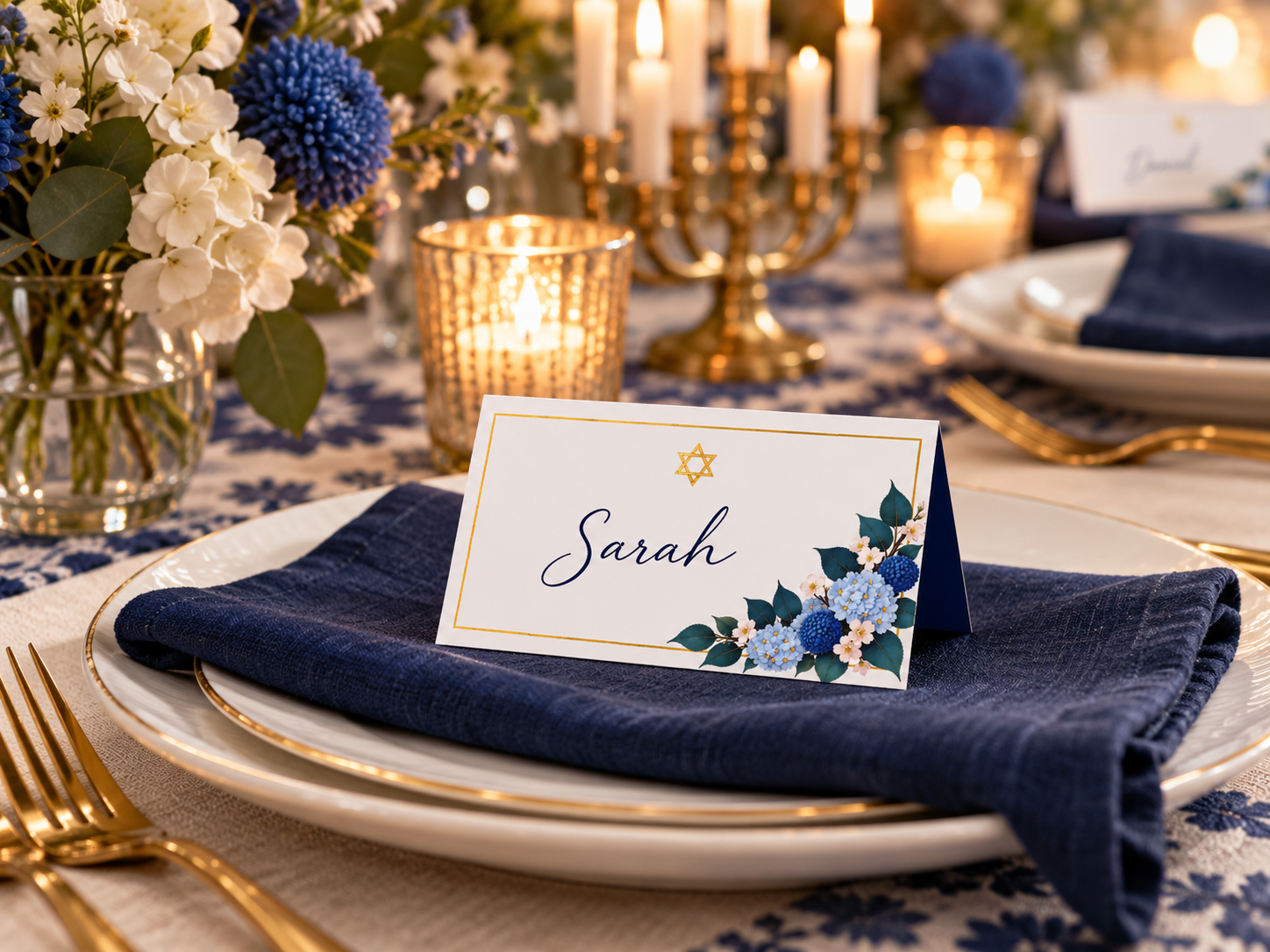
Sometimes the smallest details make guests feel the most welcome. A handwritten place card adds a personal touch to your Hanukkah table, helping everyone find their seat while making the gathering feel a little more special. Paired with soft florals, navy linens, and warm candlelight, it's a simple way to create a thoughtful place setting.
Coordinated stationery or a personalized gift tag can be a lovely finishing touch when there's a practical reason to use it.
Perhaps you're bringing a gift to someone else's home or setting aside a small present for a loved one.
These details are entirely optional.
Remember: Guests are far more likely to appreciate feeling welcomed and included than to notice whether every accessory matches.
Plan a Hanukkah Party Timeline That Leaves Room to Enjoy the Evening
A little structure can make hosting easier, particularly when food, guests, and family traditions all need consideration.
The goal isn't to create a rigid schedule. It's to prevent important moments from competing for your attention.
A Flexible Two-Hour Hanukkah Gathering
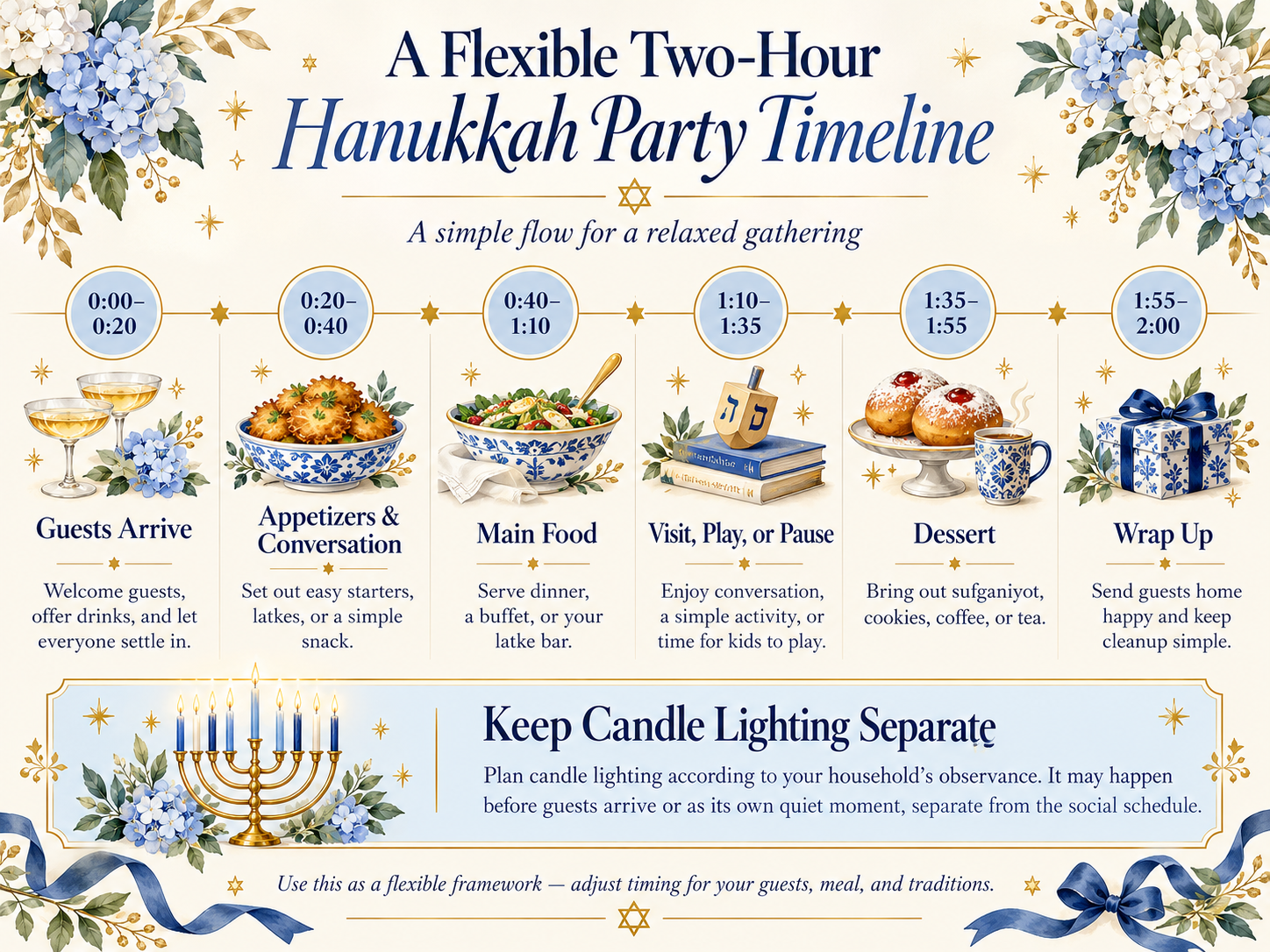
A little structure can make Hanukkah hosting feel much more relaxed. This flexible two-hour party timeline helps you plan guest arrivals, appetizers, dinner, activities, and dessert while leaving room for meaningful conversations and family traditions. Adjust the timing to suit your celebration, and plan candle lighting according to your household's observance.
For a casual gathering, a simple timeline might look like this:
Time From ArrivalSuggested ActivityFirst 20 minutesWelcome guests and offer refreshmentsNext 15 minutesGather for a shared welcome or meaningful momentNext 40 minutesEnjoy food and conversationNext 25 minutesOptional dreidel game or family activityFinal 20 minutesDessert, conversation, and goodbyes
Important: This is an example of social event flow, not a religious candle-lighting schedule.
If your gathering includes lighting the hanukkiah, determine the correct time according to the date, location, and household tradition. Then organize the social portions of the event around it.
What Changes for a Hanukkah Open House?
An open house works best with fewer scheduled activities.
Rather than asking guests to participate in a formal program, provide a comfortable setting where people can enjoy refreshments and conversation as they arrive.
Keep beverages accessible and select foods that can be replenished.
If candle lighting will take place during the event, let guests know the planned time in advance so anyone who wants to participate can make arrangements.
What If Children Are Attending?
Young guests may appreciate a short activity, but it's rarely necessary to fill the entire gathering with organized entertainment.
A dreidel game or simple activity station may be enough.
Choose something that fits your family's traditions, the ages of the children, and the time available.
Give Yourself Permission to Be Flexible
Your guests may spend longer talking than expected. Dinner might be ready a little later than planned. Children may prefer playing together to participating in an organized activity.
A timeline should help you host, not control the gathering.
Leave room for the natural rhythm of the evening.
[SAVEABLE GRAPHIC: A flexible Hanukkah party timeline showing arrival, food, conversation, optional activities, and dessert. Include a note that candle lighting requires separate timing considerations.]
Your Four-Week Hanukkah Party Planning Checklist
If the details are beginning to feel like a lot to remember, use this simple checklist to keep preparations manageable.
You can begin four weeks before your gathering or adapt the schedule if you're starting later.
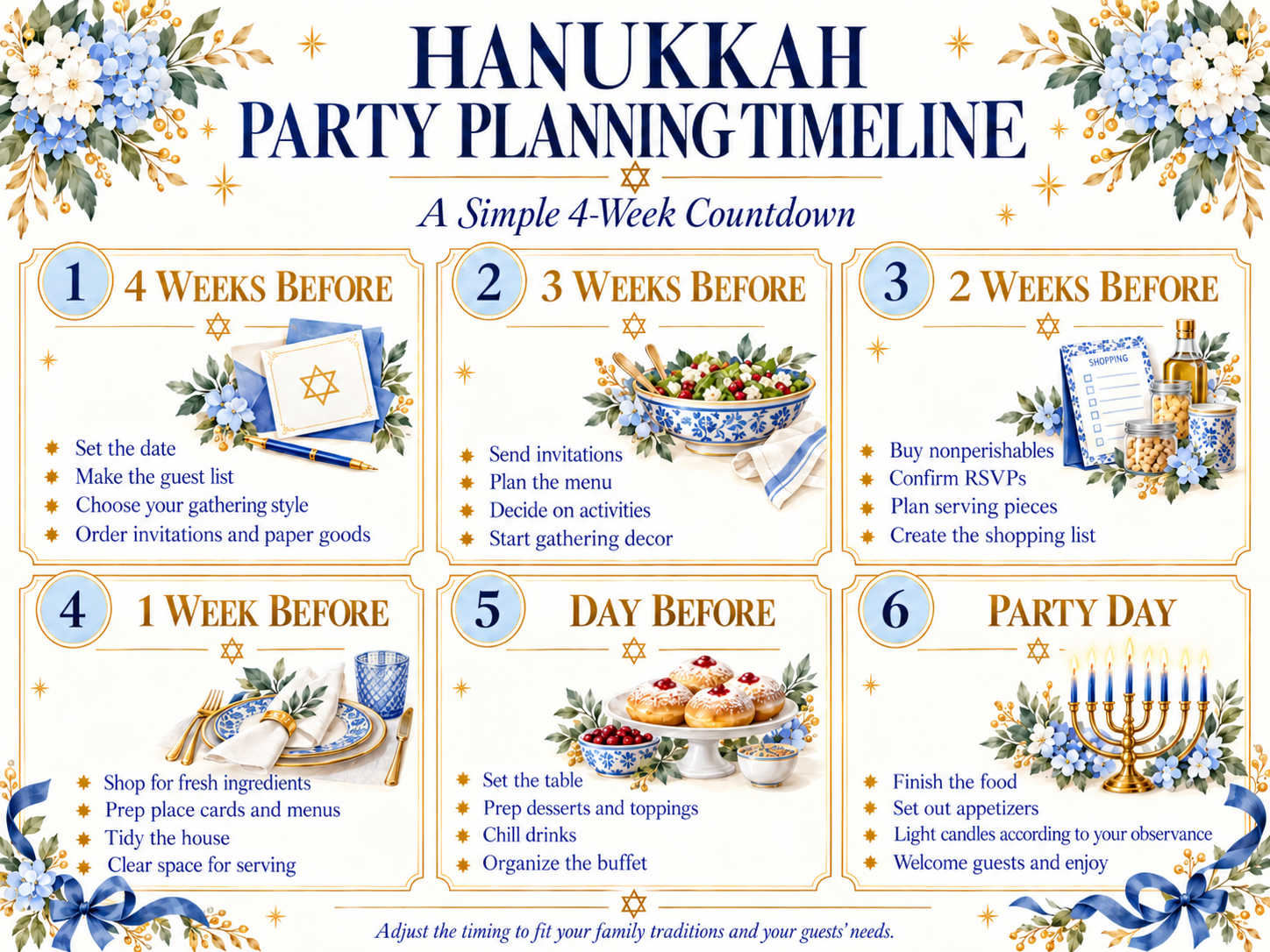
Planning a Hanukkah celebration is easier when you spread the preparations over a few weeks. This simple four-week Hanukkah party planning timeline walks you through invitations, menu planning, shopping, decorating, and final party-day preparations so you can spend less time feeling rushed and more time enjoying the Festival of Lights with family and friends.
Four Weeks Before: Choose Your Plan
Decide whether you're hosting a dinner, casual party, open house, or family celebration.
Choose the date and check any religious scheduling considerations.
Establish a comfortable guest limit.
Create your invitation list.
Set a realistic budget.
Choose and order personalized invitations if desired.
Three Weeks Before: Invite and Organize
Send invitations.
Establish an RSVP deadline.
Decide on the menu format.
Ask about dietary needs and observances.
Determine whether children will need activities.
Make a preliminary list of dishes and supplies.
Two Weeks Before: Finalize the Details
Follow up with guests who haven't responded.
Review seating and serving space.
Coordinate any dishes guests are bringing.
Check the status of ordered party essentials.
Make a grocery list.
Decide what you can prepare early.
One Week Before: Prepare Ahead
Confirm your expected guest count.
Purchase nonperishable supplies.
Review your menu and preparation schedule.
Check serving equipment and seating.
Confirm any candle-lighting arrangements and necessary supplies.
Create a flexible gathering timeline.
The Day Before: Make Tomorrow Easier
Prepare make-ahead recipes.
Organize serving dishes and utensils.
Arrange seating and tidy gathering areas.
Prepare beverages and nonperishable refreshments.
Check food storage needs.
Confirm any guest contributions.
Party Day: Enjoy Your Celebration
Finish necessary food preparation.
Set up refreshments and serving areas.
Prepare a safe candle-lighting location, if applicable.
Check religious timing requirements.
Welcome guests.
Follow the evening's plan without rushing.
Take time to enjoy the gathering yourself.
One final reminder: The checklist is a tool, not a test. You can skip anything that doesn't fit your gathering.
The best Hanukkah celebration isn't necessarily the one with the most elaborate preparations. It's the one that allows the people gathered to enjoy meaningful time together.
Free Printable Hanukkah Party Planning Checklist
Want to make your Hanukkah party preparations a little easier? I've created a free, printable Hanukkah Party Planning Checklist to help you stay organized without feeling overwhelmed.
This one-page planner takes you from four weeks before your celebration all the way through party day, with simple checkboxes for invitations, menu planning, shopping, decorating, and final preparations.
There's even space to record your party date, guest count, and personal reminders.
Print a copy, keep it somewhere handy, and check off each task as you go. Remember, the goal isn't to host a perfect celebration—it's to create a meaningful gathering you can enjoy, too.
Frequently Asked Questions About Hosting a Hanukkah Party
How do you plan a simple Hanukkah party?
Start by choosing your celebration format, date, and guest list. Send invitations that explain what guests can expect, plan a manageable menu, and prepare as much as possible ahead of time. A flexible gathering timeline helps keep the evening organized without making it feel overly scheduled.
Do you have to host a Hanukkah party on the first night?
No. Hanukkah lasts eight nights, and a social gathering can take place on a date that works for your household and guests. If candle lighting is part of the celebration, plan around the appropriate religious timing and your family's observance.
How early should you send Hanukkah party invitations?
Approximately three to five weeks is a useful planning guideline for many local gatherings. Send invitations earlier when guests are traveling or when personalized stationery requires additional production and shipping time.
What food should you serve at a Hanukkah party?
Popular Hanukkah foods include latkes and sufganiyot, along with other traditional dishes that vary among Jewish communities. The rest of the menu can reflect your family's preferences, guests' dietary needs, and whether you're serving a seated dinner or casual refreshments.
What do guests do at a Hanukkah party?
Activities depend on the household and type of gathering. Guests may share a meal, spend time in conversation, enjoy Hanukkah songs, play dreidel, or participate in candle lighting where appropriate. Not every gathering needs organized games or a formal schedule.
How long should a Hanukkah party last?
A casual gathering might last approximately two hours, while a seated dinner or open house may run longer. Consider the guest list, meal format, children's needs, and any religious observances when deciding how much time to allow.
A Meaningful Hanukkah Gathering Doesn't Need to Be Complicated
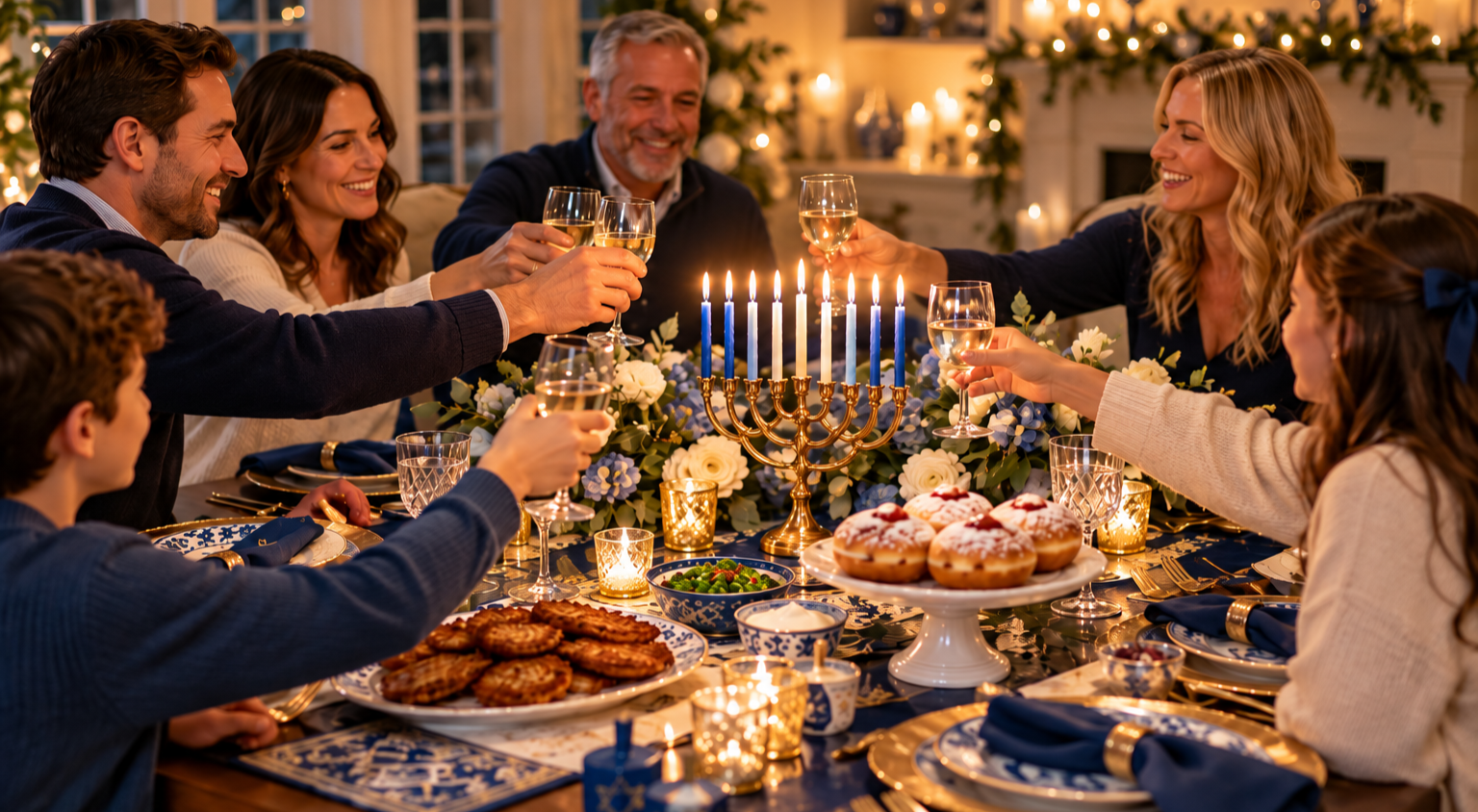
At the heart of every Hanukkah celebration are the moments we share with the people we love. Whether your gathering is simple or elaborate, it's the laughter, familiar traditions, meaningful conversations, and time spent together that make the Festival of Lights so special. The most beautiful celebrations aren't necessarily the most perfectly planned—they're the ones that leave everyone feeling welcomed, connected, and loved.
Hosting a Hanukkah celebration is an opportunity to bring people together, share traditions, and create space for connection.
You don't need an elaborate menu, perfectly coordinated decorations, or an activity planned for every moment.
Begin with the gathering that feels right for your household, prepare the essentials, and leave room for the evening to unfold naturally.
A little thoughtful planning can help you spend less time worrying about the details and more time enjoying the people you've invited.
And if personalized invitations or coordinated stationery are part of your plans, explore the Elegant Hanukkah Invitations and Party Essentials collection from Chateau Whispers for designs to complement your celebration.
After all, some of the most memorable gatherings are the ones where everyone—including the host—feels comfortable enough to simply enjoy being together.
A Little Light Goes a Long Way
The most meaningful celebrations aren't necessarily the most elaborate. They're the ones where people feel welcomed, where traditions are shared, and where ordinary moments become cherished memories.
Whether you're hosting a beautiful sit-down dinner, inviting friends over for latkes, or gathering family around the menorah, remember that you don't have to make everything perfect to make it special.
A thoughtfully prepared table is lovely, but it's the laughter, the familiar stories, and the warmth of being together that guests will remember long after the evening ends.
My hope is that this guide helps you spend a little less time worrying about the details and a little more time enjoying the people gathered around you.
Wishing you a Hanukkah filled with love, light, and moments worth remembering.
With love,
Leska
Chateau Whispers
