
How to Organize a Friendsgiving Potluck Without the Chaos
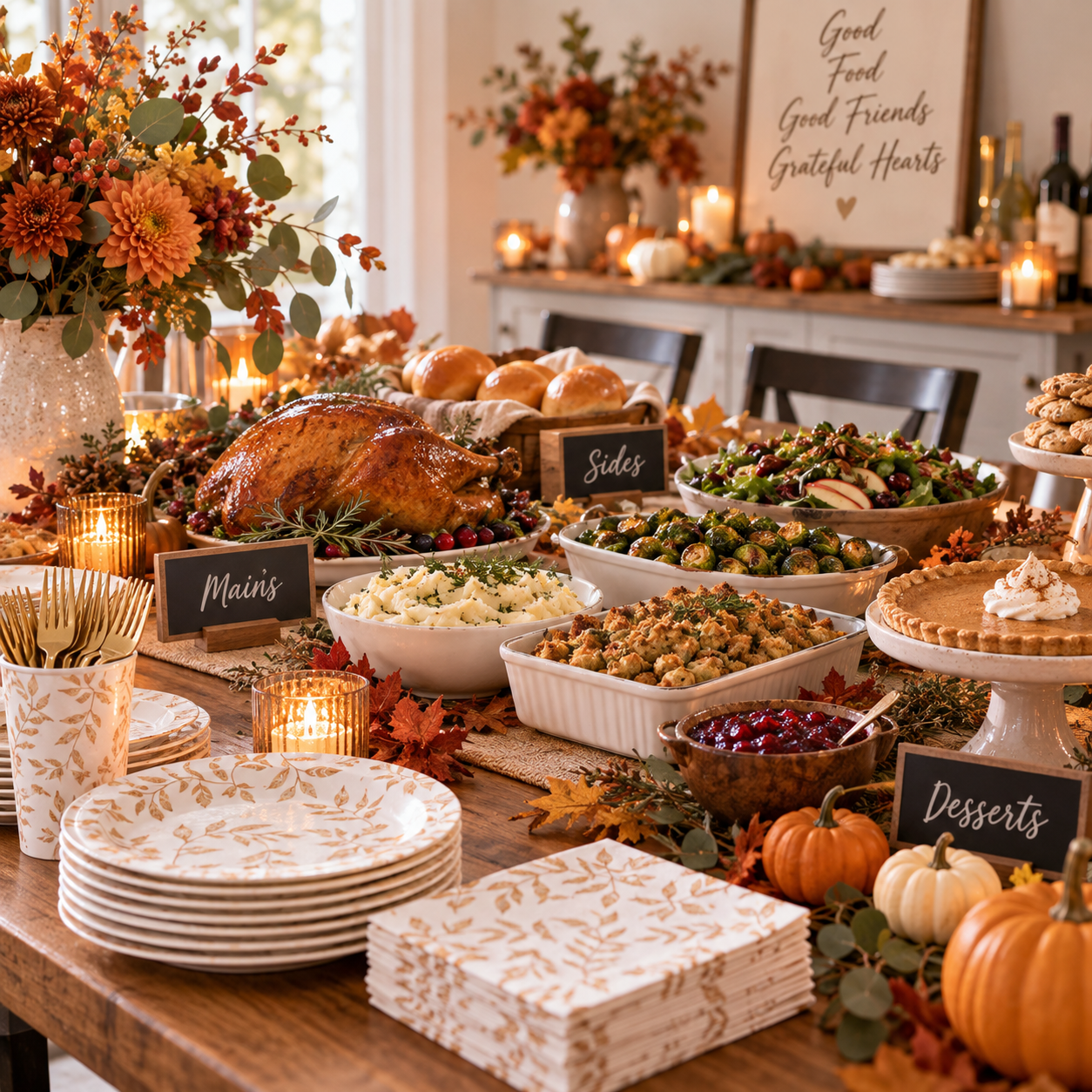
A cozy Friendsgiving potluck comes together more smoothly when mains, sides, desserts, and serving space are organized before guests arrive.
A Friendsgiving potluck works best when everyone contributes—but nobody has to guess what to bring.
The simplest approach is to decide what the host will provide first, divide everything else into categories, and let guests choose a dish within the category they are assigned. Then, before party day, make sure you know which dishes need oven space, refrigeration, or last-minute prep.
That little bit of structure can be the difference between a relaxed table filled with a little of everything and a kitchen full of five casseroles that all need to bake at the same time.
If you love the cozy side of Friendsgiving too, our guide to hosting a cozy Friendsgiving has ideas for invitations, table styling, seasonal details, and creating a warm atmosphere. Here, we are focusing on the part that tends to create the most confusion:
Who brings what—and how do you organize all of it without becoming the potluck manager from now until Thanksgiving?
Start With What the Host Is Providing
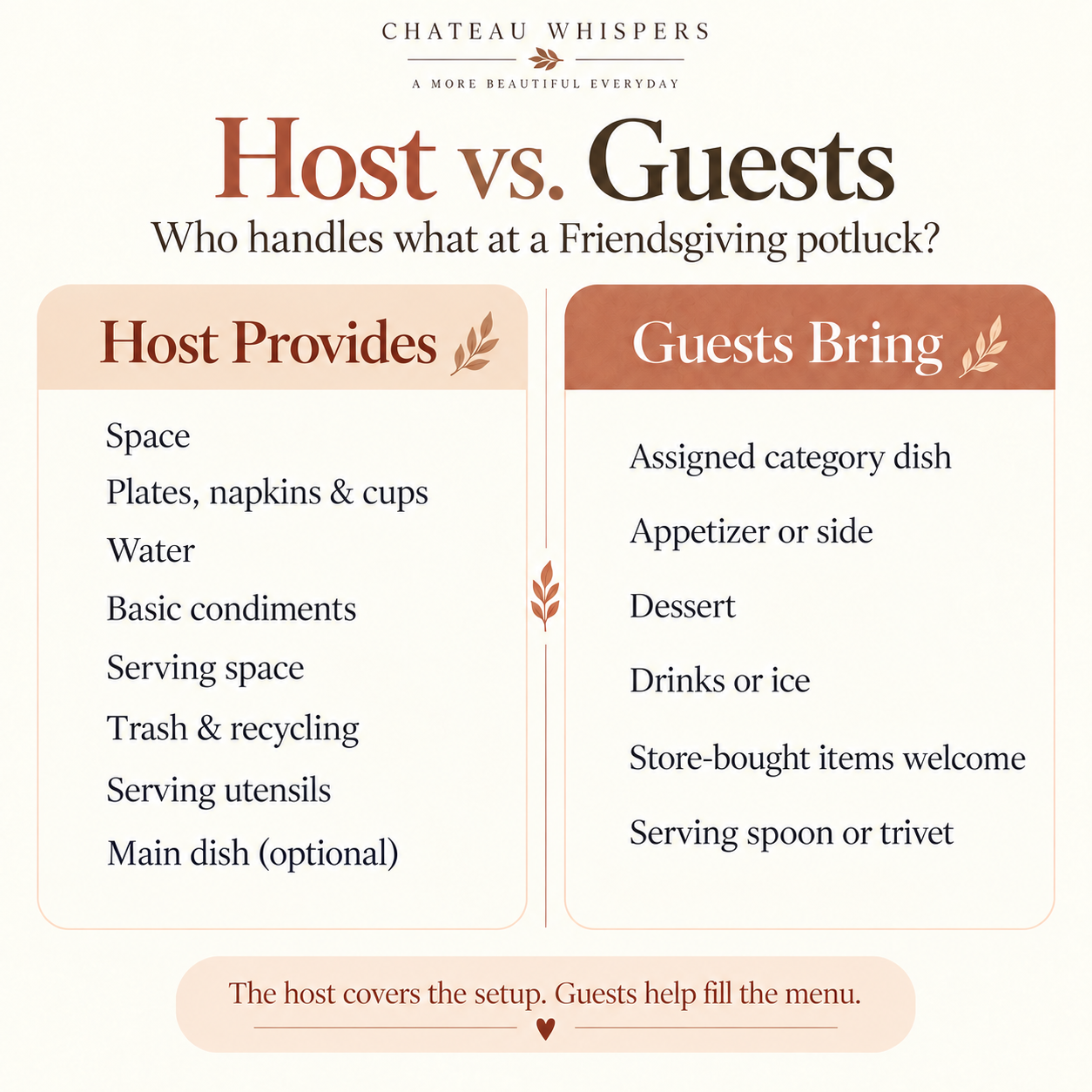
A smooth Friendsgiving potluck starts with clear roles—the host handles the setup and essentials, while guests help fill the menu with assigned dishes, drinks, and serving pieces.
Before asking anyone else what they want to bring, decide what you are already covering.
There is no rule that says the host must cook the turkey, make the gravy, provide every drink, and somehow have a spotless house at the same time.
The host’s most important job is actually providing the infrastructure for the gathering.
That usually means thinking about:
the space
plates, napkins, cups, and flatware
water
basic condiments
serving space
trash and recycling
serving utensils
somewhere to keep hot food hot
somewhere to keep cold food cold
Then decide whether you want to provide the main dish too.
Some hosts love making the turkey or ham.
Others would rather ask a trusted friend to handle the main and concentrate on the house, drinks, and setup.
Either can work beautifully.
What matters is knowing what is already covered before everyone else starts volunteering.
Keep the Tableware Simple
A potluck does not need elaborate place settings.
When several people are bringing dishes and your house is full, coordinated paper pieces can actually make hosting easier while still making the table feel intentional.
Our Colorful Modern Thanksgiving & Friendsgiving Collection includes coordinating autumn leaf plates, napkins, cups, invitations, and other Friendsgiving pieces that can help bring the table together without creating a sink full of dishes at the end of the night.
Build a Friendsgiving Potluck Map
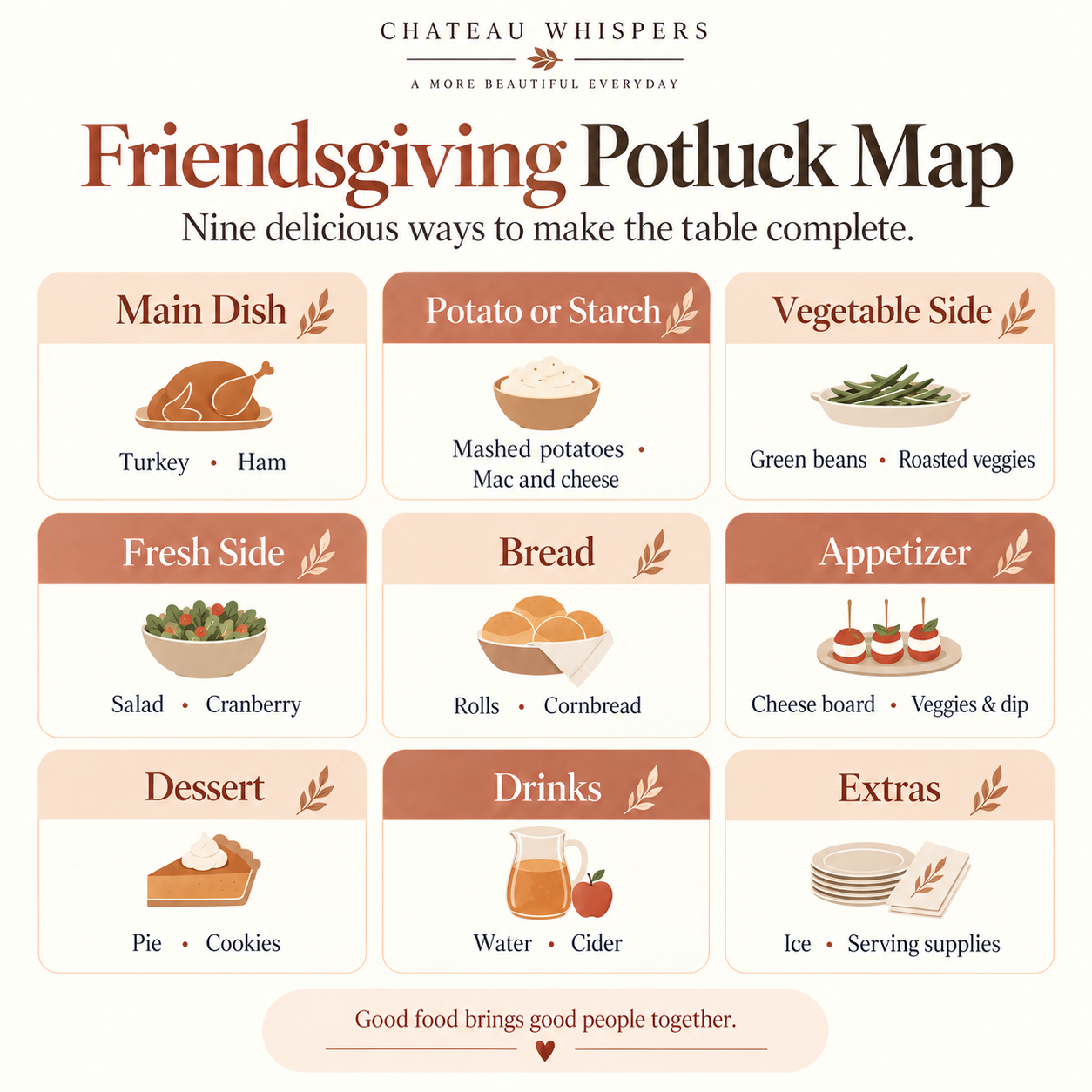
Use this Friendsgiving Potluck Map to make sure the meal includes a main dish, filling sides, something fresh, bread, appetizers, dessert, drinks, and the practical extras that are easy to forget.
This is the part that makes everything else easier.
Instead of saying:
“Everybody bring something!”
create categories first.
A simple Friendsgiving Potluck Map might look like this:
Main Dish
Turkey, ham, roast, vegetarian main, or another centerpiece dish.
Potato or Starch
Mashed potatoes, sweet potatoes, macaroni and cheese, rice, or another filling side.
Vegetable Side
Green beans, Brussels sprouts, carrots, corn, roasted vegetables, or casserole.
Fresh Side
Salad, slaw, fruit, cranberry dish, or something bright that balances the heavier food.
Bread
Dinner rolls, biscuits, cornbread, or another bread.
Appetizer
Cheese board, dip, deviled eggs, vegetables and dip, or another small bite.
Dessert
Pie, cake, cookies, cobbler, brownies, or another sweet.
Drinks
Water, sparkling water, soda, cider, punch, coffee, or whatever fits your group.
Extras
Ice, butter, whipped cream, serving supplies, or anything else your table will need.
You do not need every category for every Friendsgiving.
The point is simply to see the whole meal before people begin claiming dishes.
That prevents the classic potluck problem:
four desserts, three kinds of macaroni and cheese, and nobody remembered the drinks. If you like having the menu mapped out before shopping begins, our simple meal planner and grocery list system can also help keep the food side of hosting organized.
Assign Categories, Not Exact Recipes
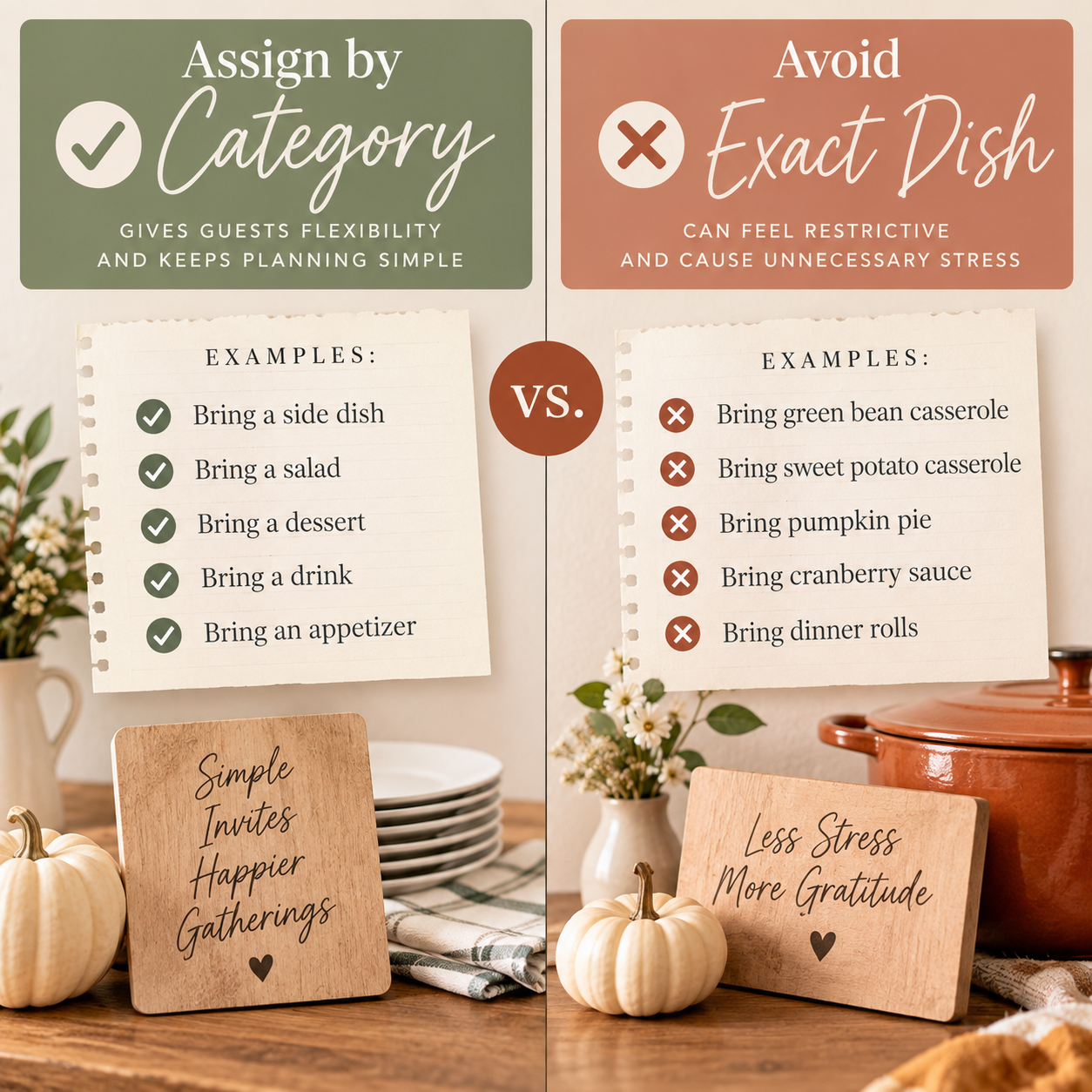
Assign Friendsgiving contributions by category instead of prescribing exact recipes—it keeps the menu balanced while giving guests freedom to bring something they’re comfortable making.
One of the easiest ways to organize a potluck without sounding bossy is to give guests a category rather than telling them exactly what to cook.
Instead of:
“Can you make green bean casserole?”
try:
“Would you mind bringing a vegetable side?”
Instead of:
“You need to make pumpkin pie.”
try:
“Could you handle one of the desserts?”
That gives you enough control to create a balanced meal while still letting your friends choose something they actually enjoy making.
Once they decide, have them tell you the specific dish.
Your list might eventually look like:
Vegetable side — Maya — roasted Brussels sprouts
Potato/starch — Eric — mashed potatoes
Dessert — Jamie — apple pie
Drinks — Natalie — sparkling water and cider
Now everyone can see what is covered.
And nobody has to wonder whether somebody else is already making the exact same thing.
How to Ask Guests What to Bring Without Sounding Bossy
Keep it casual.
You do not need a formal assignment system unless your group enjoys one.
A simple message works:
“I’m trying to make sure we have a little of everything. Would you be up for bringing a vegetable side?”
Or:
“We have the main covered. Would you rather bring an appetizer, dessert, or drinks?”
Giving someone two or three options is especially helpful if you are not sure what they like to cook.
You can coordinate everything through a group chat, shared note, spreadsheet, online signup, or whatever your friends already use.
The tool matters much less than making sure everyone can see what is already covered.
Make the Potluck Clear From the Invitation
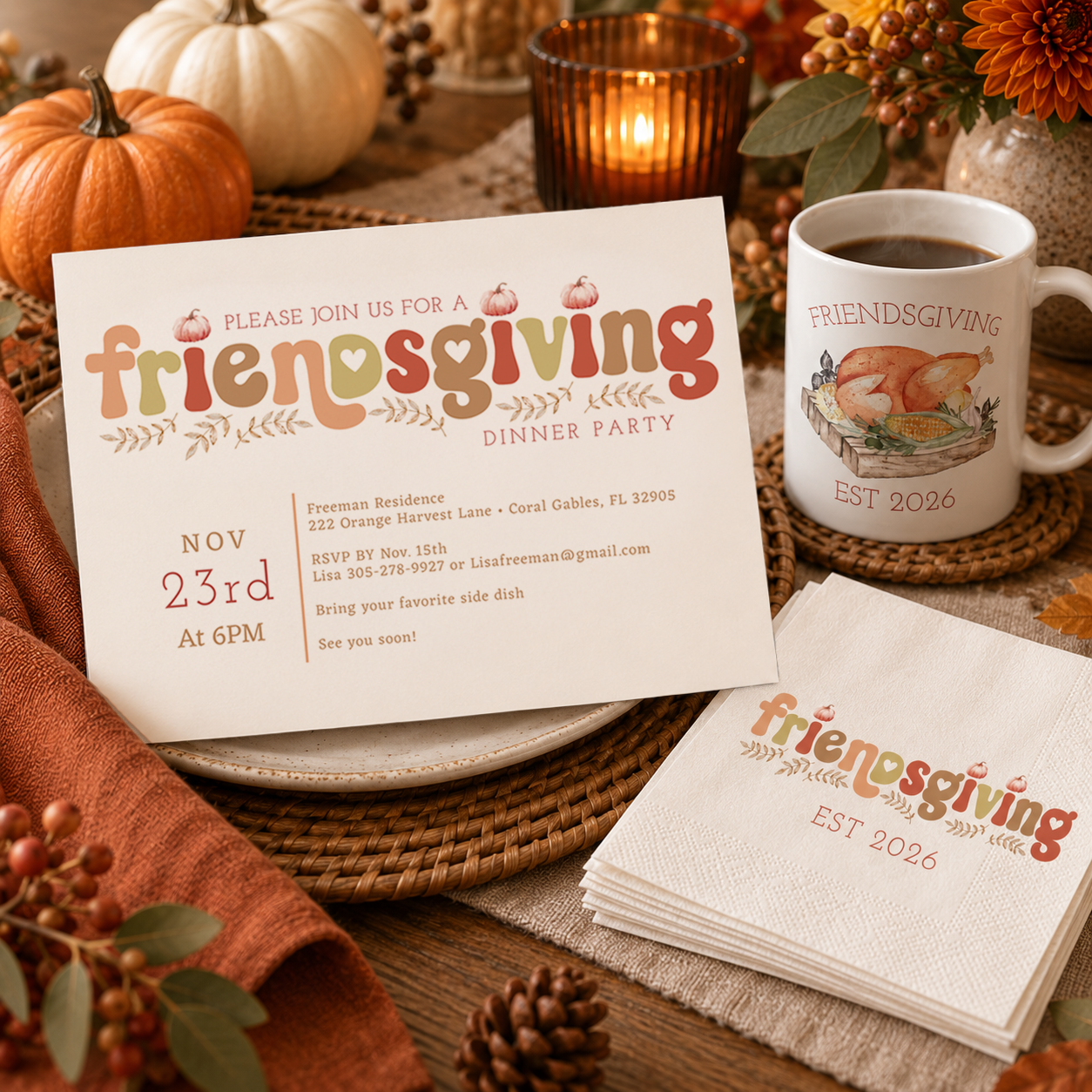
A Friendsgiving invitation can set the tone and clarify the plan from the start, especially when it pairs with simple coordinated pieces like napkins and a seasonal host mug.
If Friendsgiving is going to be a potluck, tell guests from the beginning.
That way the shared meal feels like part of the celebration—not like an assignment they receive two days before the party.
Your invitation can include something as simple as:
“Join us for a Friendsgiving potluck! We’ll coordinate dishes so everyone can bring something they love.”
Or:
“Let’s gather, gobble, and give thanks. We’re planning dinner potluck-style and will send everyone a category to help create a little bit of everything.”
Or even:
“Friendsgiving Potluck — good food, good friends, and a table we build together.”
Our Thanksgiving and Friendsgiving collection includes several invitations created specifically for Friendsgiving dinners and potlucks, from warm watercolor styles to more playful retro designs.
A potluck invitation is especially useful when you want guests to understand from the start that everyone will be contributing.
How Many Dishes Do You Need for Friendsgiving?
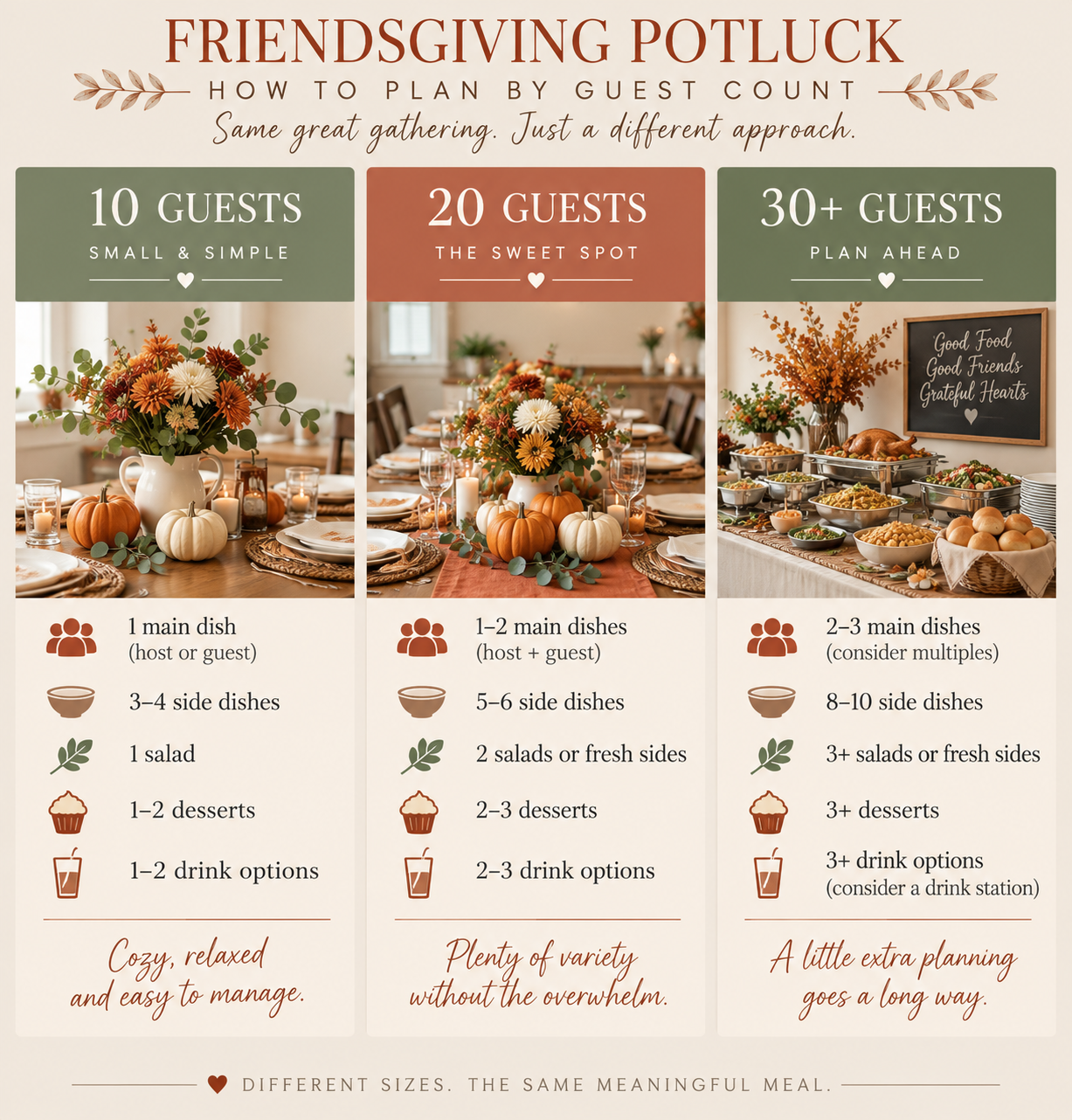
Use this Friendsgiving guest-count guide as a flexible starting point for planning mains, sides, desserts, and drinks for 10, 20, or 30+ guests.
There is no perfect formula because every group eats differently.
Ten adults who love Thanksgiving leftovers may need more food than ten adults who have been grazing on appetizers all afternoon.
Instead of trying to calculate a perfect number, make sure the meal has enough variety.
Here are a few practical starting points.
Friendsgiving for About 10 People
You might plan:
1 main
3–4 sides
1 bread
1 appetizer
2 desserts
drinks
That gives everyone choices without filling every surface of the kitchen.
Friendsgiving for About 20 People
You might plan:
1–2 mains
5–6 sides
1–2 breads
2 appetizers
3 desserts
several drink options
At this size, splitting the side dishes into categories becomes especially useful.
Instead of six people all signing up for “side dish,” make sure you have a mix of potatoes, vegetables, fresh sides, and casseroles.
Friendsgiving for 30 or More
Once the gathering gets this large, treat it more like an event.
Consider:
2 mains
several side dishes across different categories
multiple appetizers
multiple desserts
dedicated drink contributions
someone specifically assigned to ice
more than one serving station
The larger the group, the more helpful it becomes to know exactly what everyone is bringing before the day arrives.
Before Anyone Claims a Dish, Think About Your Oven
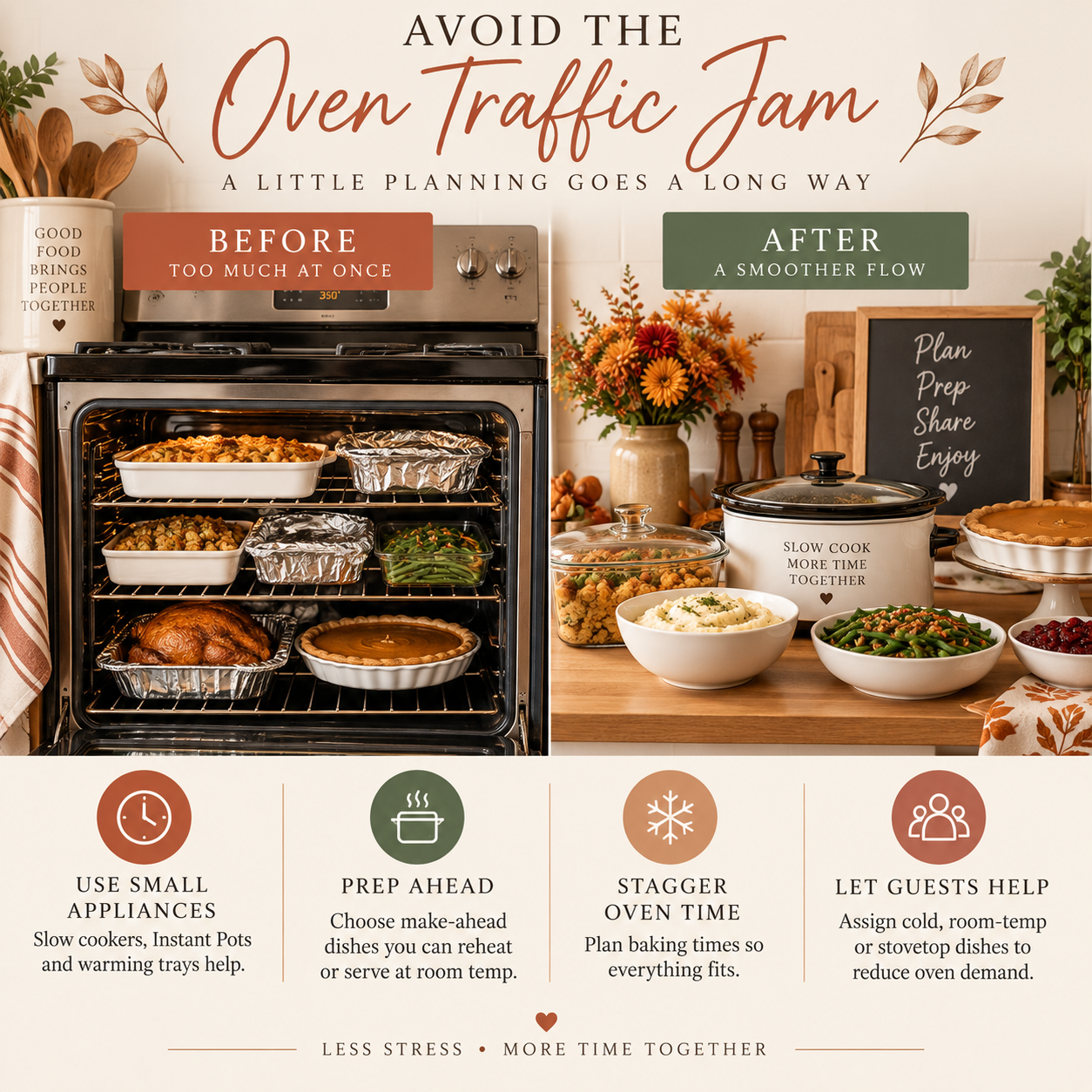
Avoid an oven traffic jam by mixing oven-baked dishes with make-ahead, slow-cooker, cold, and room-temperature options so everything can be served without last-minute chaos.
This is one of those things that sounds obvious after it happens once.
Imagine five friends arriving at the door carrying:
stuffing,
macaroni and cheese,
green bean casserole,
sweet potatoes,
and rolls.
And every person says:
“It just needs about 25 minutes in the oven.”
Your beautifully organized menu is suddenly waiting in a traffic jam.
Before people finalize their dishes, think about how much oven space you realistically have.
Try to create a mixture of:
dishes served cold
dishes served at room temperature
slow-cooker dishes
dishes that can be made ahead
food that arrives completely ready to serve
only a few items that require the oven
If someone is bringing something that needs reheating, ask:
What temperature?
How long?
Does it need to stay refrigerated until then?
Those three questions can save an enormous amount of scrambling later.
Don't Forget Refrigerator Space
The refrigerator can become just as crowded as the oven.
If friends arrive with large bowls of salad, chilled desserts, dips, drinks, and casseroles waiting to bake, you may suddenly discover there is nowhere to put anything.
The day before Friendsgiving, clear one refrigerator shelf if possible.
And if someone is bringing a dish that must stay cold, ask them ahead of time so you can plan for it.
You can also keep drinks in a cooler or beverage tub to leave refrigerator space for food.
Create a Landing Spot for Potluck Dishes
One easy way to keep Friendsgiving from taking over the kitchen is to decide where food should go when guests arrive.
Instead of everyone walking into the kitchen asking:
“Where should I put this?”
create a designated buffet or drop-off area.
A dining table, kitchen island, console table, or folding table can work.
If your main dining table is needed for seating, a separate buffet is especially helpful.
Set out:
trivets
serving spoons
labels if needed
extra napkins
a place for hot dishes
a place for desserts
Our autumn leaf tablecloth from the Friendsgiving collection is one simple way to turn an extra table into a coordinated serving station without adding much work.
Ask About Dietary Needs Before the Menu Is Finished
You do not need to create an entirely different meal for every dietary preference.
But you also do not want someone arriving and realizing there is nothing they can eat.
Before assignments are finalized, ask guests to let you know about important dietary needs.
That might include:
vegetarian
vegan
gluten-free
dairy-free
food allergies
Then make sure there are a few clearly suitable dishes.
For serious allergies, let the person tell you what level of separation is actually necessary rather than making assumptions.
It can also help to label dishes at the buffet so nobody has to ask the cook of every casserole what is inside.
What If Someone Doesn't Cook?
They can still be a fantastic potluck guest.
Friendsgiving is not a cooking competition.
If someone is short on time, doesn't have access to a kitchen, or simply does not enjoy cooking, give them something useful to contribute.
They could bring:
ice
sparkling water
cider
bakery bread
bakery pie
cheese and crackers
a prepared appetizer
coffee
flowers
paper goods
whipped cream
take-home containers
Store-bought food is still food.
The purpose of a potluck is to share the effort—not prove who made everything from scratch.
Contribution matters more than homemade.
Ask Guests to Bring the Serving Piece Too
Here is another tiny detail that prevents last-minute searching through drawers.
When possible, ask each guest to bring the utensil their dish needs.
If someone brings mashed potatoes, bring the serving spoon.
Pie?
Bring a pie server.
Soup?
Bring the ladle.
A hot casserole?
Bring a trivet or something safe to place underneath it.
You can still keep a few extra serving utensils nearby, but you will not need to own twelve serving spoons just because twelve people brought food.
A Sample Friendsgiving Potluck Plan
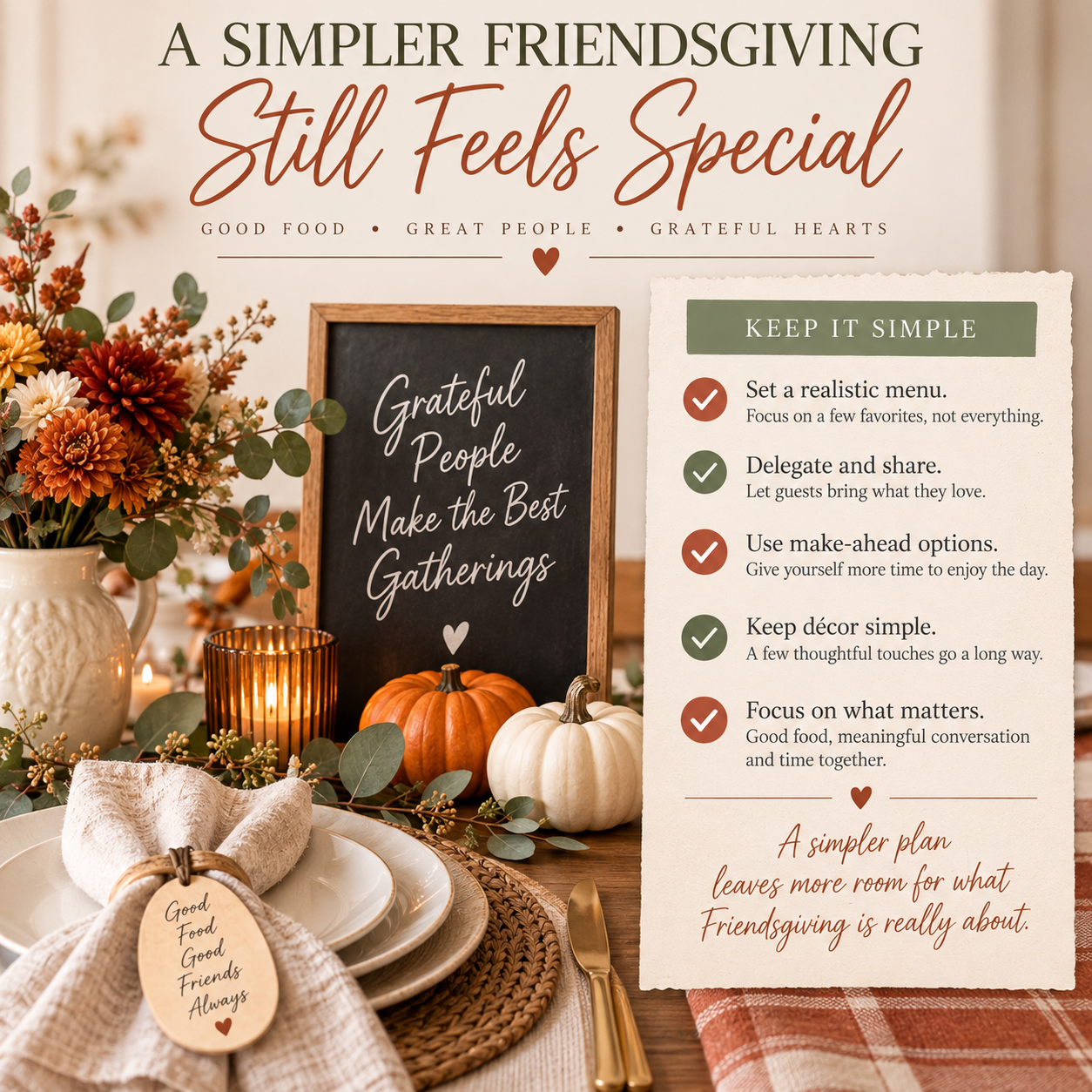
Friendsgiving checklist infographic with reminders to send invitations, plan the menu, confirm the headcount, create a simple timeline, ask for help, set the mood, prepare ahead, and enjoy the gathering.
Sometimes the easiest way to picture the system is to see it in action.
For a Friendsgiving of about 12–14 people, your plan could look like this:
Host: turkey, gravy, water, tableware
Guest 1: appetizer — cheese board
Guest 2: potato side — mashed potatoes
Guest 3: vegetable — roasted Brussels sprouts
Guest 4: vegetable — green bean casserole
Guest 5: fresh side — autumn salad
Guest 6: bread — dinner rolls
Guest 7: dessert — pumpkin pie
Guest 8: dessert — apple crisp
Guest 9: drinks — cider and sparkling water
Guest 10: extras — ice and whipped cream
Now imagine the same group receiving:
“Everybody bring a side.”
The difference is not more work.
It is simply a little planning before everyone shops.
The 48-Hour Friendsgiving Check
Two days before the gathering, look at your list one final time.
You do not need to chase everybody down with a dozen questions.
Just confirm the important pieces:
What is everyone bringing?
Make sure no category quietly disappeared.
What needs the oven?
Create a rough heating order.
What needs refrigerator space?
Clear room now.
Do you have enough serving space?
Decide where appetizers, dinner, desserts, and drinks will go.
Who is bringing drinks and ice?
These are easy things to assume someone else is handling.
Do you have the basics?
Plates, napkins, cups, serving utensils, trash bags, containers, water, and basic condiments.
Once those things are settled, stop planning.
Friendsgiving does not need a minute-by-minute production schedule.
Your Potluck Does Not Have to Be Perfect
The point of Friendsgiving is not to create the most perfectly balanced Thanksgiving menu anyone has ever eaten.
Someone may still bring an unexpected casserole.
Two people may both show up with pie.
A friend may forget the rolls and stop at the grocery store on the way.
That is okay.
A little structure simply gives everyone enough direction that the host is not carrying the entire meal alone.
Organize the categories.
Let your friends choose dishes they enjoy.
Make sure the oven isn't booked solid.
Then leave room for the night to feel like what Friendsgiving is supposed to be:
good food, good people, and a table everyone helped create.
And once your menu is handled, you can head over to our Cozy Friendsgiving Guide for simple ideas to make the table and gathering feel warm, welcoming, and beautifully put together.
I hope this helps you spend a little less time coordinating and a lot more time actually enjoying the people around your table.
With love,
Leska
Chateau Whispers
